Retracted publications can have a significant impact on researchers, including both the authors of the retracted articles and researchers who may unknowingly cite them.
- Reasons for Retraction
Retractions may occur due to:
- Research misconduct, including academic fraud (such as fabricated data, serious scientific errors, manipulated results), plagiarism, false peer review, duplicate publication, or unauthorized publication without proper permission.
- Errors, including unintentional mistakes or administrative oversights.
A retraction is an official statement indicating that the research findings are no longer considered reliable and should not be used as a basis for further academic work.
- Publication Status
Retracted articles are not removed from journals. Instead, they remain available with a clear "Retracted" watermark or label on the publisher's website.
3. Retracted Articles Should Not Be Used as a Citation Source
Citing a retracted article may cause your research to be built on unreliable information. Researchers are strongly advised to avoid citing retracted publications.
To help prevent citation errors, major academic databases now provide updated retraction information. The Library provides access to the following databases with retraction verification tools:
|
Database |
Overview |
Description |
| ProQuest | The platform has fully integrated retraction information to help researchers identify and avoid citing retracted publications. |
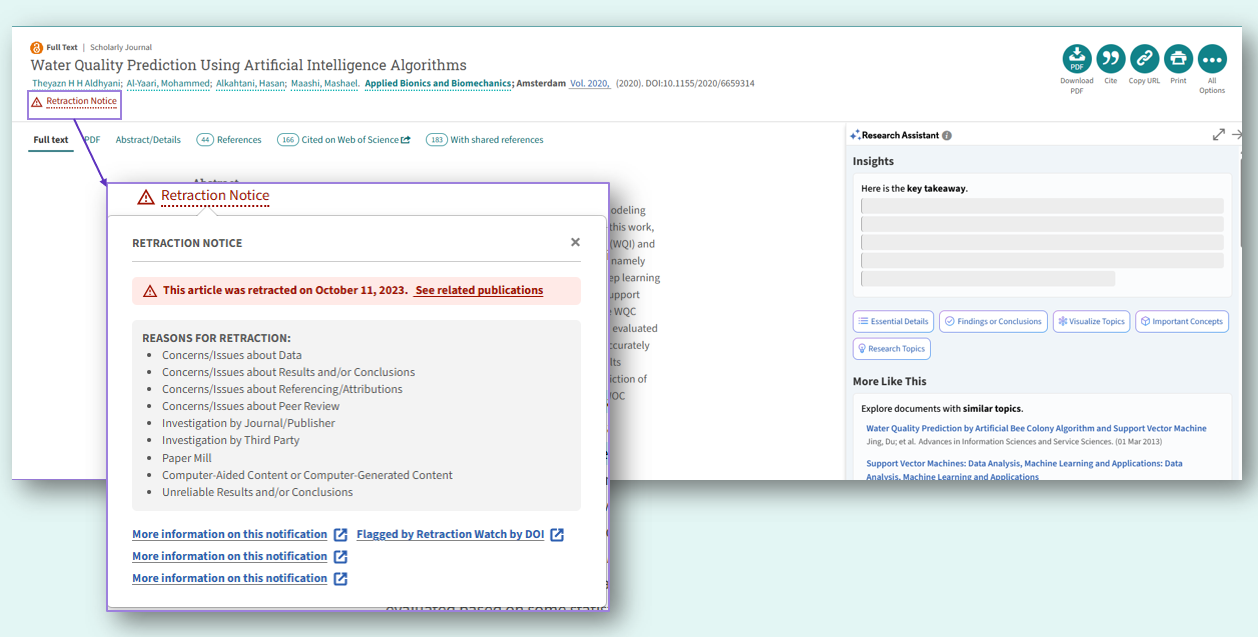
ProQuest→Retracted articles are clearly labeled "Retracted Notice." Click the notice to view the reason for the retraction.
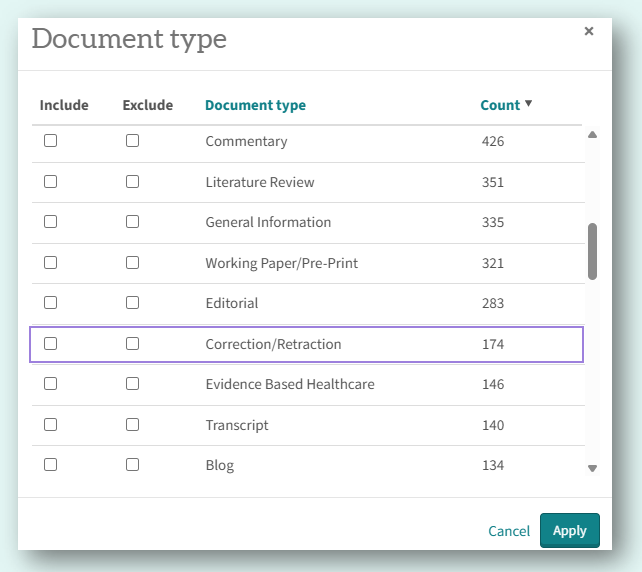
→You can filter search results by Document Type to find retracted publications.
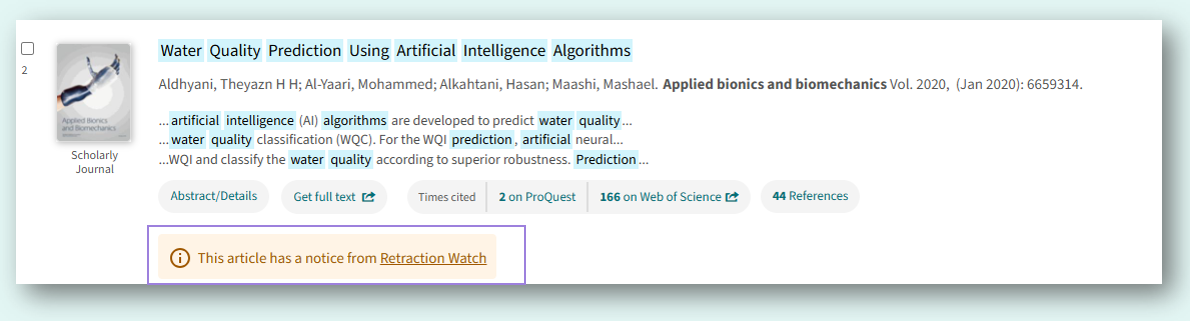
→Retracted publications are clearly identified in the search results list: 「This article has a notice from Retraction Watch」
|
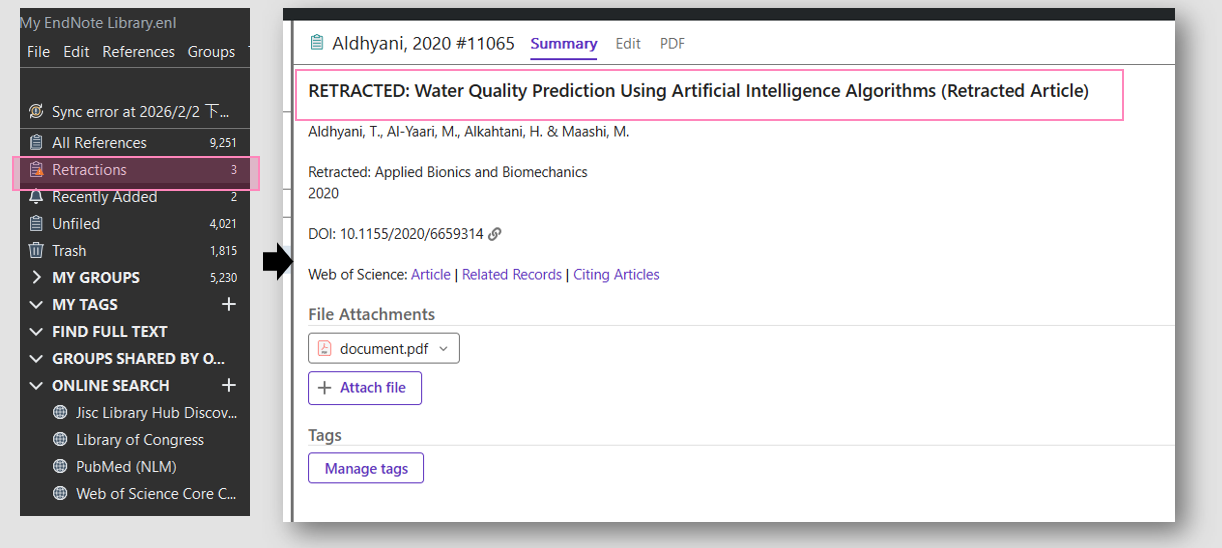
| EndNote | PDF files of retracted publications are automatically detected and prominently marked in your library. |
In EndNote, a "Retractions" group is available in the left navigation panel. It automatically gathers retracted references in your library, and each retracted reference is clearly labeled "Retracted."
|